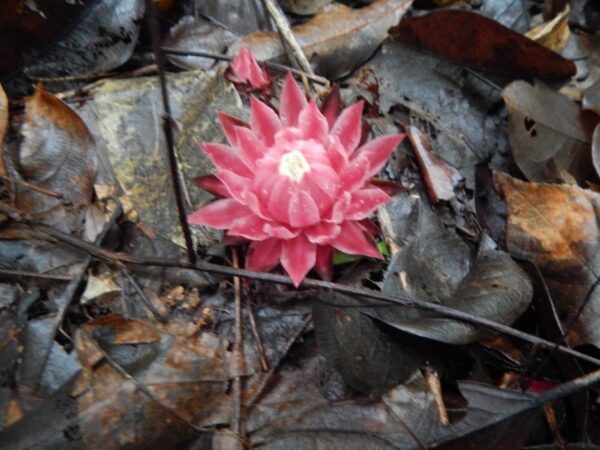

Trees are hosts to a number of parasitic plant species. Two broad categories can be distinguished, based on where they attack the host: root and stem parasites. The main root parasite affecting trees and tree crops in Africa is Thonningia sanguinea. It is widely distributed across the region and is known to parasitize on coffee, cacao, oil palm and rubber trees. Prominent stem parasitic weeds of trees in Africa are dodder, love vine and mistletoe. Dodder (Cuscuta spp.) is a large varied group, though not all species are known as important pests of trees. Species affecting trees and tree crops in Africa (mainly citrus, mango, tea and coffee) include Cuscuta monogyna, C. campestris and C. kilimanjari. Recently C. reflexa has been reported in trees in Kenya. Love vine (Cassytha filiformis) is easily confused with dodder (Cuscuta spp.) due to similar morphology and overlapping host species. It is widely distributed across Africa; economically important hosts include coconut, mango, cashew, avocado and citrus trees. Mistletoe (families Loranthaceae and Viscaceae) is the largest group of parasitic plant species in Africa. Key genera/species include Viscum spp., Tapinanthus spp., Phragmanthera spp. and Erianthemum dregei, which have a broad host range. Mistletoes affect numerous tree species of economic and cultural importance, such as shea (Vitellaria paradoxa) and cola (Cola nitida) in West Africa.
Through a newly launched online survey, we would like to learn and increase the awareness about the occurrence of parasitic plants in trees. We hope to get a better idea on the spread on these parasitic plants, which tree species are commonly affected and how do these plants impact tree (crop) production and rural livelihoods. In addition, we would like to learn what control methods are used, and whether there are any benefits of these parasitic plants that may require conservation rather than control.
We invite all professionals working on African agro-forest trees, in particular those with recent knowledge on local situations on the ground, to participate in this survey. The general survey link can be found here for English and here for French.
For respondents from (or with specific knowledge on) Uganda or Benin a dedicated country survey was developed, which can be accessed here for Uganda and here for Benin.
Thank you very much in advance.
Natalia Cano Marimom & Shiroma Sathyapala – FAO
Samuel SSebulime, Ronald Kisekka & Kasifa Katono – NARO, Uganda
Christine Ajokè Ouinsavi & Fatiou Ibrahim & – Université de Parakou, Benin
Debbie Muir – DEFF, South Africa
Jonne Rodenburg – Wageningen University
Photo: Thonningia sanginea on rubber in Nigeria (rights: E.I. Aigbokhan)